
Drape vs Durability: Cotton vs Viscose for Dresses
- Phuong Nguyen

- 7 days ago
- 9 min read
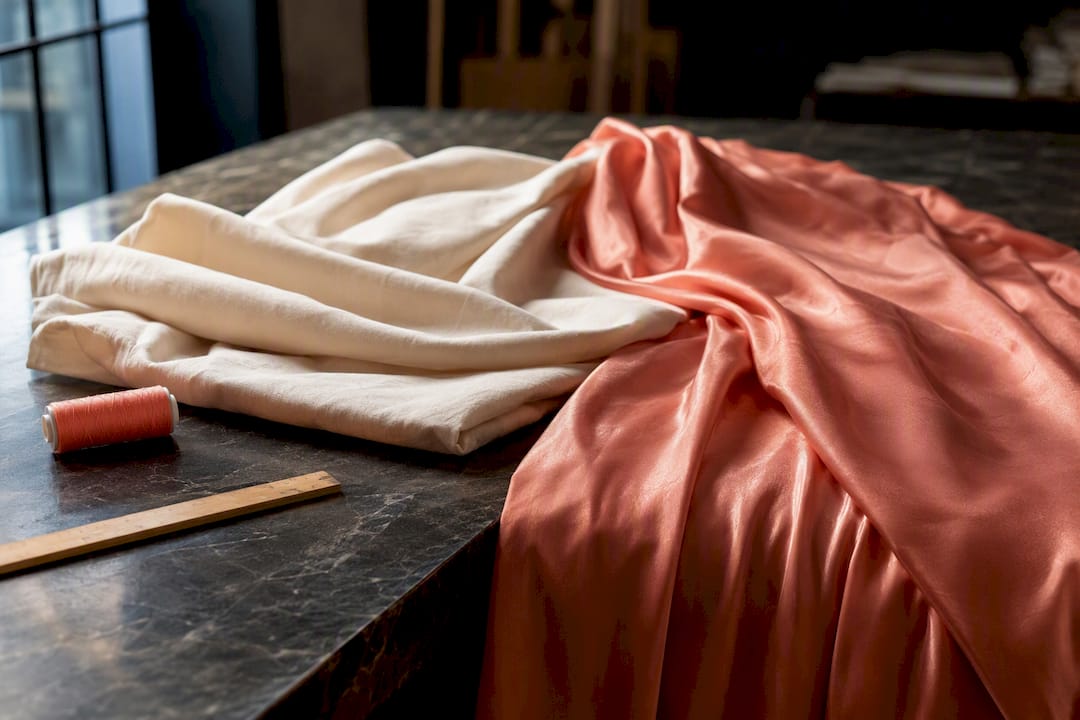
For every day, low-maintenance basics, pick cotton. For silk-like drape and soft movement, pick viscose. The real trade-off is care and wet strength versus hand and fluidity: cotton launders easily and holds up over years, while viscose moves beautifully but demands gentler handling. The rest of this guide breaks down exactly where each fabric earns its place in your closet.
TL;DR:
Viscose offers superior drape and a silk-like feel but is less durable when wet, requiring gentle handling and flat drying to prevent damage.
Cotton is more resilient to washing and retains shape longer, making it ideal for everyday wardrobe staples and items like towels and kids’ clothes.
Blends of viscose and cotton can provide a balance of movement and durability, but sourcing and construction significantly impact performance and sustainability.
Organic cotton and certified cellulosic viscose options reduce environmental impact, but both fibers require careful examination of certifications.
For sensitive skin, cotton remains the safer choice due to its natural, breathable structure and lower chemical residue risks.
Table of Contents
Cotton vs Viscose: What Each Fabric Actually Is
Cotton is a natural plant fiber harvested from the cotton boll, spun into yarn, and woven or knit into fabric; for a high-level comparison of natural fibers, see our guide on linen vs cotton: which fabric is right for you? Staple length matters more than most shoppers realize: Pima and Egyptian cotton use longer fibers that produce a smoother, stronger yarn, while shorter-staple cotton feels coarser and pills faster. The same fiber can become dramatically different fabrics depending on construction. Cotton poplin is a tight, plain weave that gives shirts and structured dresses their crisp, tailored look, while cotton jersey knits stretch and drape closer to the body, and twill weaves like denim add durability through diagonal ribbing.
Viscose, often labeled rayon, is a regenerated cellulose fiber made from wood pulp that’s chemically processed and spun into filament. It isn’t synthetic in the way polyester is, but it isn’t a raw natural fiber either. This manufacturing process is exactly why viscose delivers a silky hand and fluid drape that mimics silk at a fraction of the cost.
Construction changes viscose just as much as it changes cotton:
Viscose challis: lightweight and matte, common in printed boho dresses
Viscose crepe: slightly textured with a subtle bounce, popular for blouses
Viscose jersey: knit for stretch, used in draped tops and loungewear
Blends complicate the picture further. A viscose-cotton blend can borrow drape from one fiber and wash resilience from the other, and mercerized cotton (treated to boost sheen and strength) can feel almost silky itself.
How Do Cotton and Viscose Compare in Feel and Performance?
Viscose almost always drapes and feels silkier than cotton, and the fiber’s molecular structure explains why. Regenerated cellulose fibers are smoother and more flexible than cotton’s natural fiber structure, which is why viscose is often the go-to choice for elevated dresses and blouses that need to skim the body rather than sit on it. Weave and weight (measured in GSM, or grams per square meter) push that further: a lightweight viscose voile flows more than a heavier viscose crepe, and the same swing applies to cotton, where a low-GSM cotton lawn feels airy while a heavier cotton twill holds shape.
Breathability tells a different story. Cotton fibers absorb moisture and release it relatively quickly, which is part of why it stays a reliable pick in heat and humidity. Viscose is also absorbent, sometimes more so than cotton, but it can feel clingy once damp with sweat because it lacks cotton’s natural fiber structure that helps air move through the weave. In dry heat, both perform well; in humid conditions, cotton typically feels less sticky against the skin.
Durability is where the gap widens the most. Cotton generally holds greater wet strength than viscose, meaning it resists tearing and stretching in the wash. Viscose can weaken considerably when wet, which raises the risk of shrinkage, seam distortion, and stretched-out hemlines if it isn’t handled carefully. That’s a real concern for a wrap dress hem that needs to hold its line after a handful of washes, whereas a cotton T-shirt can take years of machine washing and still hold its shape.
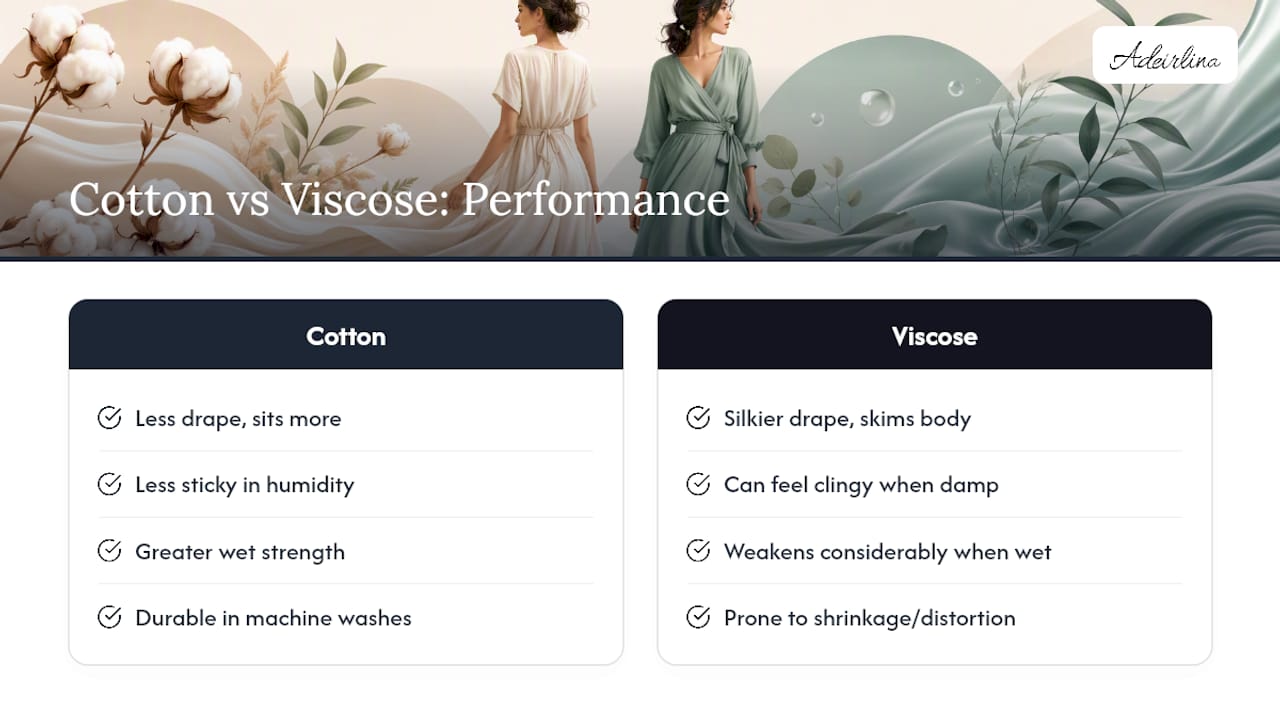
A quick way to remember the trade-off: viscose rewards you with movement and shine but asks for gentler care; cotton asks less of you in the laundry room but won’t swing the same way on the dance floor.
Wrinkling and surface wear follow a similar pattern. Cotton wrinkles visibly but recovers with a simple iron. Viscose wrinkles less dramatically in some weights but can lose its sheen or develop pilling faster in cheaper constructions. Neither fiber is “better” here so much as suited to different jobs, which is the entire premise behind choosing one over the other in the first place.
Which Fabric Should You Choose for Each Type of Garment?
Wrap dresses, blouses, and resortwear: Viscose wins when the garment’s entire purpose is fluid movement. A viscose maxi dress catches a breeze and skims the body in a way cotton simply can’t replicate, and viscose takes printed patterns with unusual clarity, which is why so many statement floral dresses use it.
T-shirts, shirting, and denim: Cotton is the practical choice anywhere repeat washing and daily wear are the priority. Cotton’s structure and predictable wash behavior make it the standard for basics that need to survive a busy wardrobe rotation.
Towels and bedding: Cotton’s absorbency and wet strength make it the only sensible option here; viscose’s tendency to weaken when saturated rules it out for anything that gets soaked and wrung out regularly.
Kids’ clothing: Cotton again, for the same reason parents already know: it tolerates hot washes, frequent stains, and rough play far better than a fiber that needs delicate handling.
Mixed-need pieces: When you want drape without sacrificing all durability, a viscose-cotton blend can balance movement with improved wash resilience, which is a smart middle ground for occasion dresses you plan to wear more than once.
When shopping online, check the GSM listed alongside the fabric name. A lightweight cotton poplin summer dress and a heavier cotton twill piece will fit into your wardrobe completely differently, even though both are “just cotton.”
Which Fabric Is More Sustainable: Cotton or Viscose?
Neither fiber gets a clean pass on sustainability, and the honest answer depends on sourcing more than fiber type. Conventional cotton farming uses significant water and agrochemical inputs, which is why organic cotton, grown without synthetic pesticides and with lower water intensity in many regions, has become the preferred standard for brands trying to reduce their footprint.
Viscose carries a different set of risks. Its wood pulp sourcing and the chemical processing used to convert pulp into fiber can cause real environmental harm when done irresponsibly, but closed-loop and certified cellulosic processes meaningfully reduce that impact compared to conventional viscose production.
Look for these signals when you want a more responsible purchase:
Organic cotton certification on the label
OEKO-TEX certification, which screens for harmful chemical residues
Textile Exchange membership or reporting, which tracks fiber sourcing standards
Lenzing-type branded cellulosic fibers, which typically use closed-loop chemical recovery
Pro Tip: A vague “eco-friendly” label on a hangtag means almost nothing on its own. Look for a named certification or a specific fiber brand you can verify independently before trusting a sustainability claim.
How Do You Wash and Care for Cotton and Viscose Without Ruining Them?
Cotton is forgiving, which is exactly why it’s the fabric most people reach for without a second thought. Most cotton garments handle a regular machine wash in cool or warm water and a normal tumble-dry cycle, though pre-shrunk cotton holds its size better over time than untreated cotton, which can lose up to a size in the first few washes if you skip a cold-water cycle. A hot iron on the cotton setting brings back a crisp finish in minutes.
Viscose needs a gentler hand. Hand washing or a delicate machine cycle in cold water is the safer route, and viscose should always lay flat to dry rather than go in the dryer, where heat and tumbling can distort the weave permanently. Reshape the garment while it’s still damp, and iron on the reverse side with low heat if it needs smoothing.
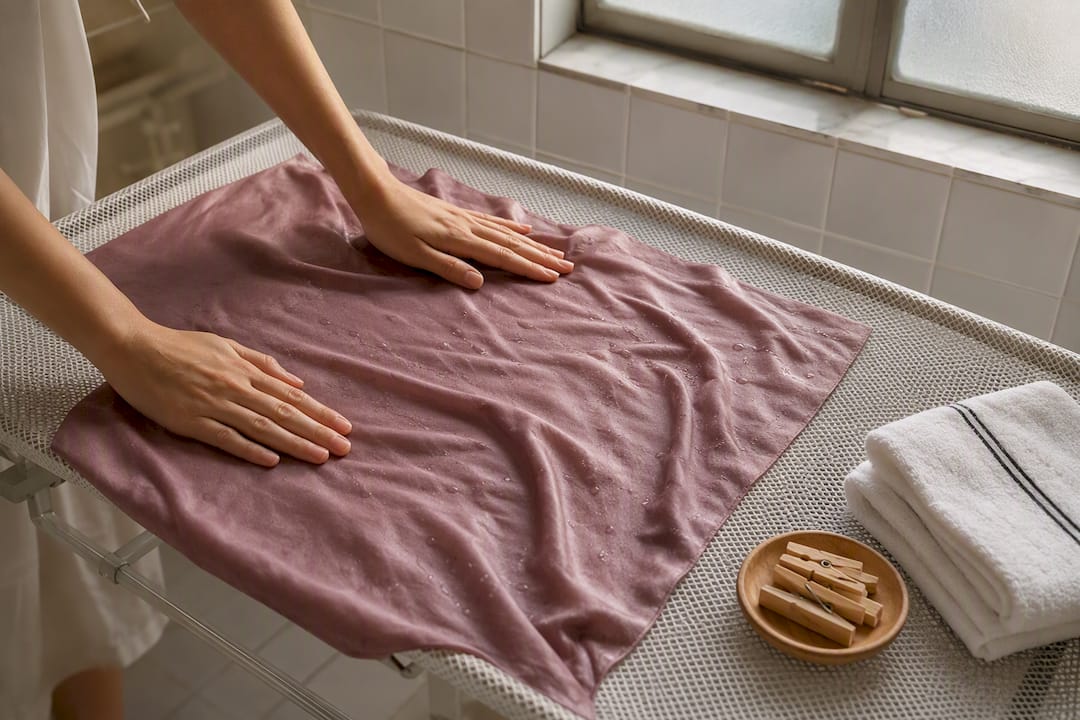
If a viscose piece already shrank or stretched, reshaping it gently while damp sometimes helps, but significant distortion usually calls for a professional cleaner familiar with delicate fibers. For step-by-step cotton routines, Adeirlina’s guide on preventing cotton shrinkage and tips on ironing cotton for a crisp finish cover the details worth bookmarking.
How Do You Choose Between Cotton and Viscose When Shopping?
Define the garment’s job first. Ask whether you need structure (a shirt that holds its collar, a dress that keeps its shape) or drape (a piece meant to move and skim). Structure points to cotton; drape points to viscose.
Match the fabric to your laundry habits. If you’re not willing to hand wash or lay flat to dry, viscose will frustrate you regardless of how good it looks on the hanger.
Inspect the construction, not just the fiber label. Check GSM, whether it’s a knit or a woven, and any finish mentioned, since quality differences within the same fiber can outweigh fiber-level differences entirely.
Consider a blend when you want both. A viscose-cotton blend is a practical compromise if you can’t decide, and it’s worth the small price bump for pieces you’ll wear often.
Pro Tip: If you’re new to sewing, cotton is the more forgiving fabric to cut and stitch, since viscose’s slippery hand makes it trickier to handle on a home machine. Save your first viscose project for after you’ve built some confidence with cotton.
Are Cotton or Viscose Better for Sensitive Skin?
Cotton is generally the safer choice for sensitive skin and allergy-prone wearers. Its natural fiber structure allows better airflow against the skin, which reduces the trapped heat and moisture that can trigger irritation or breakouts in people prone to eczema or contact dermatitis. Untreated, unbleached cotton in particular carries a lower risk of chemical residue since it skips some of the processing steps other fabrics require.
Viscose isn’t inherently irritating, but its manufacturing process involves chemical treatment of wood pulp, and trace residues can occasionally remain in poorly processed batches. Most reputable manufacturers wash these residues out before the fabric reaches a garment, but sensitive skin types sometimes report mild reactions to lower-quality viscose that cotton doesn’t cause. Dyes and finishes matter more than the base fiber here. A brightly printed viscose dress with heavy dye saturation carries more allergy risk than an undyed viscose piece, and the same logic applies to cotton.
If you have diagnosed sensitivities, look for OEKO-TEX certification on either fiber, since that standard specifically screens for the chemical residues most likely to cause skin reactions. For babies, eczema-prone skin, or anyone with a documented fabric sensitivity, plain, breathable cotton remains the lower-risk starting point, especially in garments worn directly against the skin for extended periods, like sleepwear or underlayers.
How Much Do Cotton and Viscose Fabrics Typically Cost?
Price ranges for both fabrics swing widely based on quality, so “cotton” and “viscose” alone don’t tell you much without context. Budget cotton, the kind used in mass-market basics, runs cheap because short-staple fiber and simple weaves are inexpensive to produce at scale. Premium cotton, like Pima or Egyptian varieties woven into fine poplin or sateen, costs noticeably more because of the longer staple length and finer yarn spinning involved.
Viscose tends to sit in a similar mid-range bracket to standard cotton, sometimes slightly less expensive per yard for basic challis or crepe, which is part of why it became so popular for affordable printed dresses. Branded, closed-loop cellulosic fibers cost more than conventional viscose because the chemical recovery processing adds expense, but they also carry the sustainability credentials that matter to environmentally conscious shoppers.
The real cost comparison isn’t just fabric price, it’s cost per wear. A well-made cotton piece that survives hundreds of washes over several years often works out cheaper long-term than a delicate viscose piece that needs professional cleaning or degrades faster with rough handling. When you’re comparing two garments at similar price points, factor in how much care each one will demand before you decide which one actually saves you money.
Why Adeirlina Builds Its Travel Wardrobe Around Cotton
Adjustable waistbands and stretchy fits mean one set moves from daytime activities to a sunset dinner without a second outfit change. Cotton also softens with wear, so pieces only get more comfortable over a trip. For styling ideas, browse our cotton midi dress edit or learn how to soften stiff cotton fast.
— Naomi
Meet the Matching Set Built for Every Part of Your Trip
If everything above points you toward cotton for its comfort and easy care, Adeirlina’s matching sets were designed around exactly that logic. Made from soft, breathable cotton, stretchy fit, one set carries you through a casual stroll, a golden-hour photo session, social gathering, and a night of dancing, without a wardrobe change in between.
[

This is the piece that went viral on Instagram. It’s been photographed on travelers, influencers, and celebrities across the globe for good reason: it looks elevated in every setting while feeling like loungewear underneath. It comes in multiple colors and styles, so you can match a set to a destination, a mood, or an occasion without hunting through separate tops and bottoms. Pair it with the styling notes in our guide to cotton skirt outfits for more ways to wear it. Browse the full collection at Adeirlina and pack for your next trip with one set that does the work of five.
Sources
Recommended