
The Fastest Way to Soften Cotton Clothes That Feel Stiff
- Phuong Nguyen

- Aug 25
- 8 min read

Add 1/4 to 1/2 cup of baking soda directly to the wash drum, run a gentle cycle in warm water with your regular detergent, pour 1/2 cup of white distilled vinegar into the rinse dispenser, then tumble dry on low heat for 10 to 20 minutes with two dryer balls. This single routine resolves most stiffness complaints in one wash cycle.
Most lightweight cotton softens noticeably after a wash cycle.
Heavy canvas, denim, or triple-stitched pieces may need multiple wash cycles.
No washer nearby? Mist the garment with distilled water and tumble it for 15 minutes, or hang it in a steamy bathroom while you shower.
According to HomeGearGeek’s testing, this two-stage alkaline-then-acidic approach is the standard fix recommended for heavily starched or mineral-stiffened cotton.
Key Takeaways
Softening cotton clothes fastest and most reliably comes down to combining a baking soda wash, a vinegar rinse, and a low-heat tumble with dryer balls.
Point | Details |
Fastest routine | Baking soda in the wash, vinegar in the rinse, low-heat tumble with dryer balls softens most cotton in one cycle. |
Root causes matter | Sizing, detergent residue, and hard water minerals each require a different fix, not just more softener. |
Choose the right product | Liquid softener gives the most noticeable softness; dryer sheets add static control; dryer balls avoid residue entirely. |
Machine settings count | Gentle cycle, warm water, moderate spin, and low heat with dryer balls protect fibers while maximizing softness. |
Storage prevents relapse | Loose rolling and ventilated storage keep cotton from stiffening again between wears. |
Table of Contents
Why Cotton Gets Stiff in the First Place
New cotton often ships coated in sizing, a starch-based finish manufacturers apply to protect fibers during weaving and shipping. That coating feels crisp on purpose. It is not a flaw, just a leftover from production that washes out with the right technique.
Older cotton stiffens for different reasons. Detergent overdosing is the quietest culprit: too much soap doesn’t rinse clean, and the residue dries into a waxy film across the fibers. Hard water compounds the problem, since calcium and magnesium minerals bond to cotton and build up wash after wash, leaving fabric feeling scratchy no matter how gentle your detergent is.
At the fiber level, stiffness comes down to hydrogen bonding. Cotton is cellulose, and cellulose microfibrils cling to each other through hydrogen bonds that tighten as fabric dries. Moisture and mechanical action, meaning agitation and tumbling, break those bonds temporarily and let fibers relax back into a softer drape.
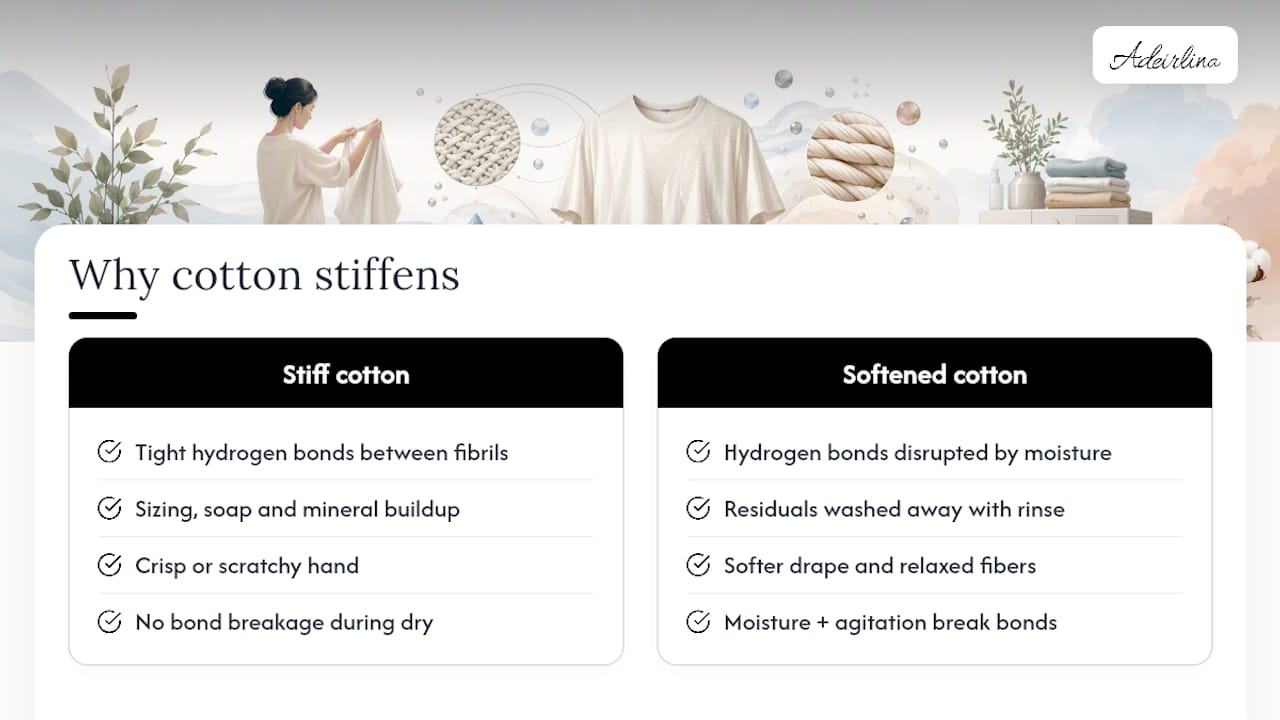
Pro Tip: If a garment feels stiffer after every wash instead of softer, check your detergent dose first. Most people use nearly double what the label recommends, and that excess is often the real problem, not the fabric.
How to Soften Cotton Fabric With Natural Ingredients
Natural softening methods work with cotton’s chemistry rather than coating over it, which is why they hold up over repeated washes better than most commercial products.
Baking soda wash. Add 1/4 cup for a small load or up to 1/2 cup for a full load directly into the drum, never the detergent dispenser. Baking soda raises the water’s pH, which helps dissolve leftover starch and soap film.
Vinegar rinse. Pour 1/2 cup of white distilled vinegar into the rinse compartment or add it manually during the rinse cycle. Vinegar chelates mineral deposits and neutralizes soap residue, according to SAINTY’s fabric care guidance. Skip this step on silk-blend trims or antique buttons, since the acidity can dull certain finishes over time.
Enzyme detergents for stiff or new cotton. Enzyme-based formulas break down starch and protein residue more effectively than standard detergents. They work best in warm water between 90°F and 105°F, since enzymes lose activity in water that’s too hot or too cold.
Two-step method for stubborn stiffness. Soak the garment in warm water (about 100°F) with 1/2 cup baking soda for 30 minutes, agitate by hand or on a short cycle, then run a full wash with a vinegar rinse. This sequence mirrors the approach HomeGearGeek recommends for heavily starched cotton and shortens the break-in period considerably.
Keep soak water under 110°F. Anything hotter risks shrinkage, especially on unpreshrunk cotton.
Commercial Softeners, Dryer Sheets, and Dryer Balls: What Actually Works
Liquid fabric softeners and dryer sheets both work by depositing cationic surfactants onto fibers, which reduce friction between them and create that instant smooth feel. The tradeoff is absorbency: coated fibers hold less moisture, which is why softener isn’t ideal for towels or athletic wear.
Liquid softeners (Downy is a common U.S. choice) go into the rinse compartment or dispenser and deliver the most noticeable softness of any method tested, according to the Good Housekeeping Cleaning Lab.
Dryer sheets (Bounce is widely used) offer lighter softening plus static control, with less residue buildup over time than liquid softener.
Wool dryer balls soften mechanically with zero chemical residue, making them the safer long-term pick for anyone rotating a lot of cotton through the wash.
Avoid softener and dryer sheets entirely on flame-resistant clothing, since the coating can compromise the fabric’s fire-retardant properties.
Downy’s own product guidance notes that liquid softener should go into the rinse compartment or drum during rinse, works fine in HE machines, but should never be used on flame-resistant garments.
Getting Your Washer and Dryer Settings Right
Machine settings matter as much as what you add to the water. The wrong cycle can undo even a perfect baking soda and vinegar routine.
Use the gentle or permanent-press cycle for lightweight cotton; save normal cycles for heavier canvas or denim.
Wash in warm water, since it helps enzymes and detergent work without weakening fibers the way hot water can over time.
Keep spin speed moderate. Over-agitation actually recompresses fibers and can undo softening progress.
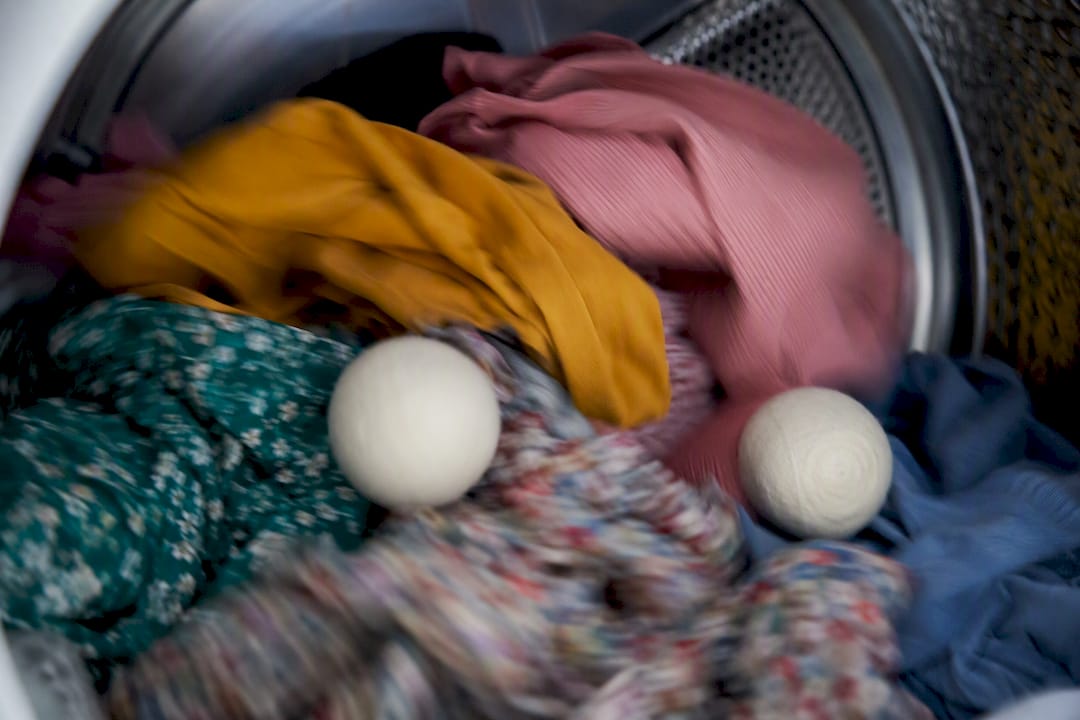
Dry on low or medium heat with two to three dryer balls tumbling alongside the load, then finish with a short 10 minute tumble for extra fluff.
For delicate pieces, air-dry until barely damp, then finish with a hand steamer or a cool iron to relax any remaining stiffness.
Light cotton typically reaches its softest state within three to five wash cycles, but if your dryer isn’t working efficiently, it can affect drying quality and fabric softness — learn more about troubleshooting at Clothes Dryer Not Drying? - Amazon Air Duct Cleaning. Heavy canvas or raw denim can take eight to fifteen cycles before it fully breaks in.
Pro Tip: Dryer balls work better wet. Toss two into the dryer while they’re still damp from the wash before you start the cycle, and they’ll thump against the fabric harder, breaking up hydrogen bonds faster.
Quick No-Wash Fixes for Travel Days
A full wash cycle isn’t always an option, especially mid-trip. These tricks buy you soft, wearable fabric in minutes.
Mist the garment lightly with distilled water, add a few drops of glycerin if you have it, then tumble in a hotel dryer for 10 minutes with anything that adds bulk.
Hang the piece in a steamy bathroom for 15 minutes while you shower, or run a handheld steamer over it directly.
Scrunch and stretch the damp fabric by hand for a minute or two. That simple mechanical motion relaxes hydrogen bonds almost as effectively as a dryer.
When Softening Doesn’t Work: Troubleshooting Stubborn Stiffness
If a garment stays stiff after two or three attempts, something beyond ordinary sizing or residue is likely at play.
Run a plain rinse cycle with no detergent to check for lingering suds; visible foam means residue, not fabric, is the real problem.
If your water is hard, treat it with a water softener additive before washing rather than after, since minerals bond to fibers during the wash itself.
Some finishes, like permanent-press or wrinkle-resistant coatings, are chemically bonded and largely resistant to home softening.
Always spot test on an inside seam first, and skip softener altogether on flame-resistant garments, microfiber, and moisture-wicking athletic wear.
Pro Tip: If a garment has been through five or more softening attempts with no change, the stiffness is probably a permanent fabric finish, not something in your wash routine. Stop trying variations and just work with a steamer instead.
Keeping Adeirlina’s Cotton Sets Soft From Suitcase to Sunset
Adeirlina designs its matching sets from lightweight, breathable cotton with an adjustable, stretchy fit meant to move through an entire day without a single outfit change. That only works if the fabric stays soft through every wash and every packing job.
Wash Adeirlina sets on a gentle, cold-to-warm cycle and skip the dryer when possible; air-drying preserves the adjustable elastic and stretch built into each piece.
Mid-trip, a hotel dryer on low heat for 10 minutes with a towel tossed in works as a stand-in for dryer balls.
No dryer at all? Hang the set in a steamy bathroom for 15 minutes and it will relax right back into shape.
The Carnival Crop-top is a good example of a piece built for exactly this kind of travel day, breathable enough for a market stroll in the morning and soft enough to layer for a sunset dinner without a wrinkle in sight.
Naomi notes that the sets have gone viral on Instagram for a reason: they travel like nothing else in a suitcase, and they come in a wide range of colors. There’s a shade for every destination, mood, and occasion.
How to Store Cotton So It Doesn’t Stiffen Again
Softening cotton is only half the job. Fabric that gets crushed into a drawer or left folded for months can stiffen right back up, even without a single wash.
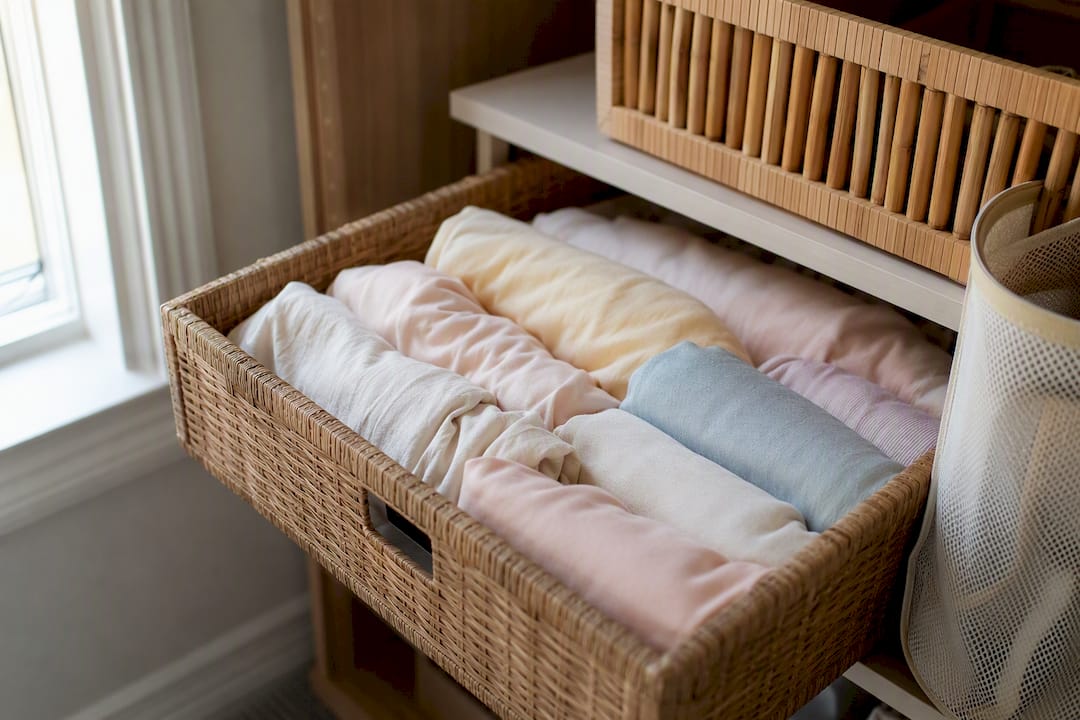
Humidity is the biggest factor. Cotton fibers absorb moisture from the air, and when that moisture evaporates slowly in a closed space, it can leave fibers more rigid than before. Store cotton garments in a dry, ventilated space rather than a sealed plastic bin, which traps humidity and encourages the fibers to set in a compressed shape.
Folding matters too. Tightly folded cotton develops crease lines where fibers get compressed for weeks at a time, and those creases resist relaxing even after a wash. Rolling garments loosely, especially matching sets and knits, distributes pressure more evenly and keeps fabric from developing permanent stiffness along fold lines.
Avoid stacking heavy items on top of lighter cotton pieces in a drawer. The pressure compresses fibers the same way an overloaded suitcase does, and lightweight cotton is more prone to this than denim or canvas. A cedar block or a breathable garment bag helps regulate moisture and keeps pests away without adding synthetic fragrance that can build up on fabric over time.
For travel, pack cotton pieces loosely rolled rather than folded flat, and give them air the moment you unpack. A few minutes on a hanger in a steamy bathroom will undo most of the stiffness that comes from being compressed in a suitcase for days.

What the Research Actually Supports
Most advice on softening cotton skips straight to product recommendations, which misses the point entirely. The research is clear that chemistry, not brand loyalty, decides whether a garment feels soft: baking soda and vinegar address the actual causes of stiffness (residue, minerals, starch) while commercial softeners mostly mask the problem with a surface coating.
That doesn’t mean softeners are useless. Downy and Bounce solve a real problem quickly, especially for people who don’t have 20 minutes to spare on a two-stage soak. But treating them as the default, rather than the shortcut, is where most advice on this topic falls short. The conventional wisdom skips over the fact that repeated softener use reduces absorbency, which matters enormously if you’re washing anything meant to breathe.
For anyone building a travel wardrobe around lightweight, versatile pieces, prioritize the wash routine first and treat storage as part of the job, not an afterthought. A garment that softens beautifully in the wash but gets crushed flat in a suitcase for a week has wasted that effort entirely.
— Naomi
Sources
Recommended