
3 Outfit Formulas to Accessorize a Sundress With 100% Cotton Sets

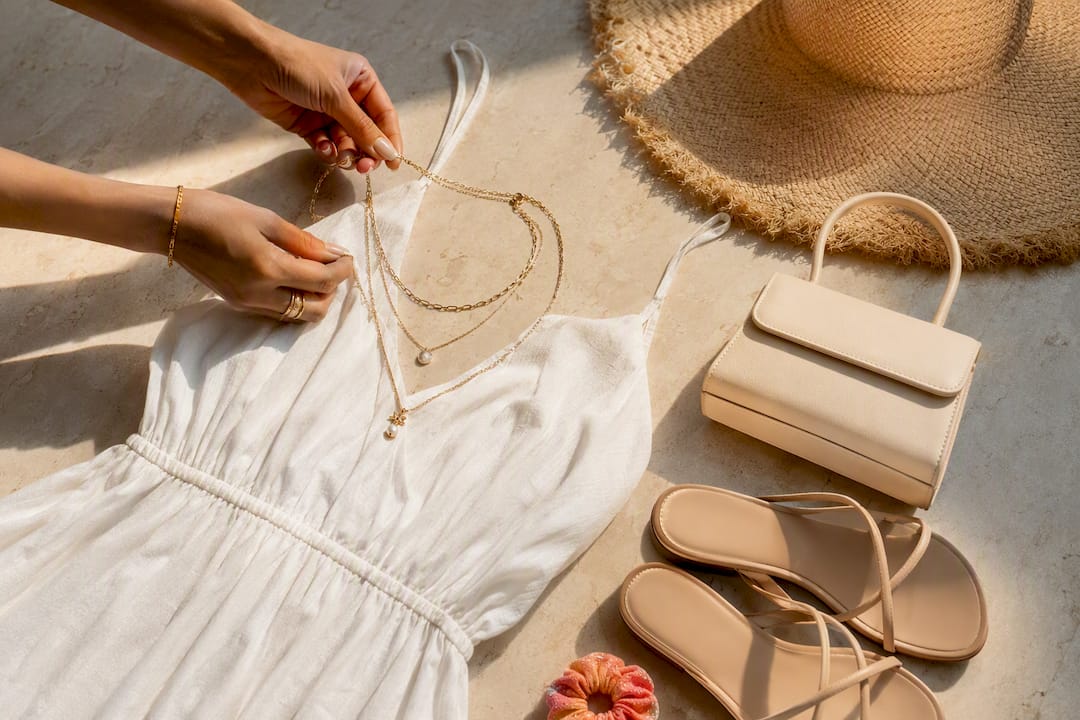
The highest-impact way to accessorize a sundress is to nail three things: a hands-free bag, a shoe you can change twice in one day, and one piece of jewelry that does the heavy lifting. Add a breathable, adjustable cotton matching set like the ones Adeirlina designs, and that single outfit stretches from a morning market to a candlelit dinner without a second suitcase full of options.
TL;DR:
Packing one adjustable, breathable cotton set with minimal accessories allows multiple outfit variations without extra luggage, simplifying travel styling.
Choosing jewelry, shoes, and bags that match the dress’s silhouette and neckline ensures harmonious proportions and visual coherence.
Swapping shoes, adding layered jewelry, or layering a blazer or wrap quickly elevates a sundress for different occasions, from casual to formal.
Neutral tones and solid colors are optimal for pattern mixing and versatile backgrounds, with accessories like scarves and sunglasses adding coordinated accents.
Seasonal layer choices, such as jackets or blazers, extend the wearability of sundresses into spring and early fall without needing additional outfits.
Table of Contents
Three Go-To Outfit Formulas to Pack and Wear
You don’t need ten outfits for a ten-day trip. You need three formulas you can repeat with small swaps, which is exactly how travel editors recommend building a sundress capsule for longer itineraries.
The day explorer formula. Supportive sandals or clean white sneakers, a hands-free crossbody bag, and a wide-brim sun hat. This trio carries you through cobblestone streets, farmers markets, and museum lines without a single wardrobe adjustment.
The afternoon-to-evening formula. Swap flats for a low wedge or heeled sandal, add delicate layered jewelry, and trade the crossbody for a clutch or mini shoulder bag. This is the formula for a late lunch that turns into golden-hour drinks.
The night-out quick-elevate. Strappy heels, statement earrings, and a lightweight wrap over the shoulders. Three items, one dress, and suddenly you’re dressed for a dinner reservation you didn’t know you’d get invited to.
Glamour’s styling notes back this up directly: a few well-chosen swaps, like a blazer, a pair of boots, or a silk scarf, can shift a sundress from romantic to polished in under a minute. The formula matters more than the specific pieces. Once you know the recipe, packing gets dramatically simpler.
Choosing Jewelry, Shoes, Bags, and Hats by Silhouette
Accessorizing well isn’t about owning more. It’s about matching scale and shape to the dress you’re already wearing.
Jewelry should respond to your neckline. A V-neck sundress calls for layered delicate chains that follow the line down. A square neckline looks sharper with a single choker or collar-length piece. Minimalist, unadorned dresses can carry a statement earring because there’s no competing detail. Shoes follow the hem. Minis pair naturally with flats or slim sandals, midis look balanced in espadrilles or a low wedge, and maxis need a low block heel to keep the proportions from swallowing your frame.
Bags set the tone of the day. A crossbody frees your hands for exploring. A straw tote signals beach and market days. A structured clutch is what turns a daytime dress into an evening one. Belts are the fastest silhouette trick available. A slim leather belt narrows the waist on a loose cotton dress, while a wider fabric belt softens a fitted one.
Hats and sunglasses need to talk to each other and to the print. A busy floral sundress wants understated eyewear; a solid-colored dress can handle an oversized frame.
Pro Tip: Keep hat brim width proportional to your face shape. A wider brim balances a narrow face, while a smaller brim keeps a rounder face from looking boxed in.
How to Dress a Sundress Up or Down in One Minute
The fastest way to change a sundress’s mood is a layer, not a whole new outfit. A structured or linen blazer instantly reads as “dinner reservation” or “client meeting.” A denim jacket or lightweight bomber does the opposite, pulling the same dress toward weekend-casual without adding real weight to your suitcase.
For modesty or a cool evening breeze, a silk scarf, thin cardigan, or gauzy wrap works better than a heavy sweater, which never earns its space in a carry-on.
Sneakers in the morning, sandals by afternoon, heels after dark. Plan your shoe rotation the way you’d plan meals.
Belt the waist of a loose dress to sharpen the shape for evening.
Knot a side hem or tuck one corner into a belt loop to shorten a look on the fly.
Swap a crossbody for a clutch the moment the sun starts to set.
None of these swaps require packing a second outfit. They require packing the right three or four extras, which is the entire philosophy behind Adeirlina’s adjustable, travel-ready sets.
Why Breathable Cotton and Adjustable Sets Win on Vacation
Heat and humidity are the two things that ruin a vacation wardrobe fastest, and fabric choice is the fix. Breathable cotton and linen let air move against skin, which is why luxury travel editors consistently point to lightweight natural fibers as the standard for hot-climate trips, alongside their forgiving wrinkle behavior compared to synthetics.
Adjustable design details, think tie straps, smocked backs, and stretch waistbands, let one piece serve several silhouettes. A dress that cinches at the waist for a fitted evening look can loosen into something relaxed for a beach walk the next morning.
Packing smart matters just as much as fabric choice:
Roll cotton pieces instead of folding to cut wrinkles and save space.
Choose one neutral matching set and one printed piece to multiply outfit combinations.
Pack shoes in fabric bags to protect the cotton from friction damage.
Build a small sundress capsule for versatile travel outfits.
Reviewer testing on travel-specific dresses backs this approach, noting that the best travel sundresses double as swim cover-ups and evening pieces when they’re cut from breathable, wrinkle-resistant fabric with a genuinely forgiving fit. A coordinated set does something a single dress can’t: it removes the daily decision of what goes with what, because the top and bottom were built to match from the start.
What to Wear With a Sundress for Common Summer Occasions
Different parts of the day call for different accessory logic, even if the dress itself never changes.
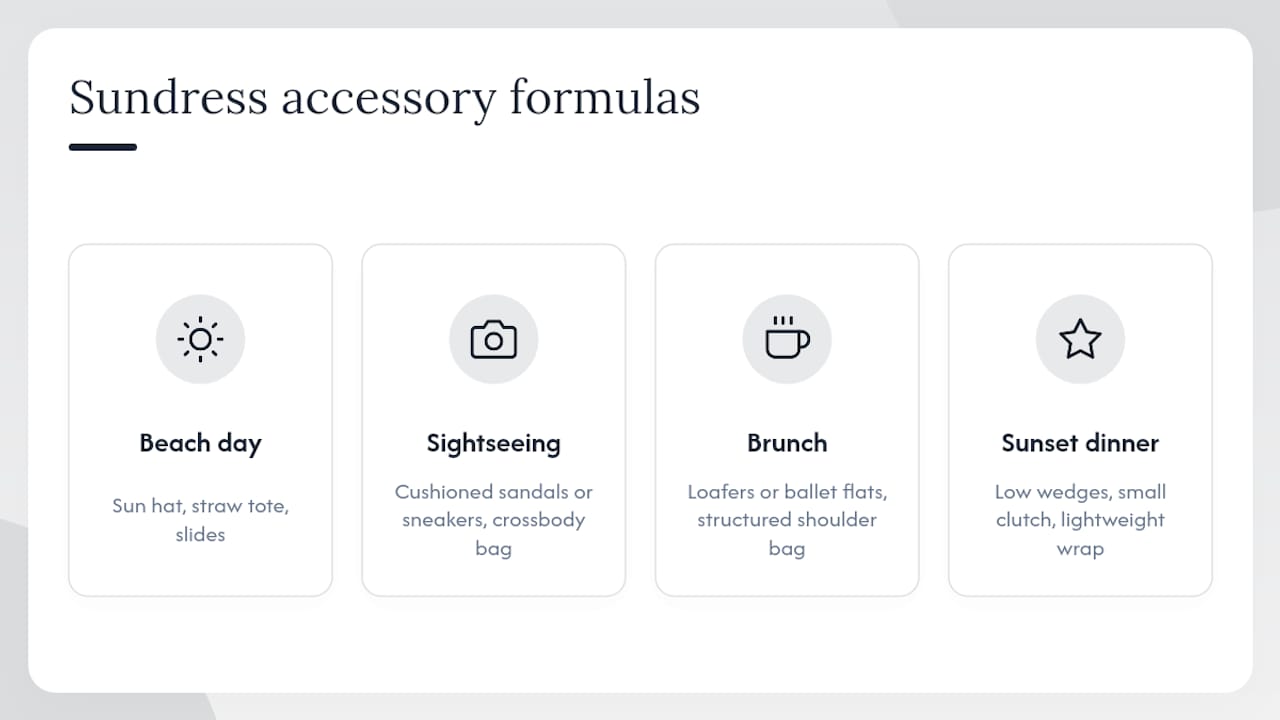
Beach days call for a wide sun hat, an oversized straw tote big enough for a towel and sunscreen, slide sandals you can kick off in seconds, and a lightweight coverup for the walk back from the water.
Sightseeing rewards comfort first. Cushioned sandals or sneakers, a crossbody bag that keeps your hands free for photos, and a sun-protective hat carry you through hours of walking without complaint.
Brunch or daytime events look sharpest with loafers or ballet flats, a structured shoulder bag, and layered delicate jewelry that catches light without shouting for attention.
Sunset dinners are where the dress earns its versatility. Low wedges or block heels, statement earrings, a small clutch, and a lightweight wrap complete a look that reads intentional, not thrown together.
Vogue’s styling guidance echoes this same logic for matching sets, recommending raffia flats, structured bags, and simple pearls to carry one outfit from beach to city without a wardrobe change. If you’re planning an actual beach getaway, ideas from beach town outfit guides can help you map exact pairings before you even pack.
Color Coordination and Pattern Mixing With Sundress Accessories
Neutral tones are the safest travel strategy, and there’s a reason editorial packing guides keep repeating it: a beige, white, or tan sundress photographs well against nearly any backdrop, from a whitewashed village to a green jungle trail. That’s not a small detail when a dress needs to work in five different locations over one trip.
The easiest rule for pattern mixing is to let the dress or the accessory carry the print, never both. A striped or floral sundress pairs best with solid-colored accessories, a woven straw bag, plain leather sandals, gold jewelry with no competing pattern. A solid-colored dress, on the other hand, is where you can afford a printed scarf, a patterned headband, or bolder sunglasses.
Color coordination works best when you pick one accent color and repeat it in two places. A coral sundress with coral-tinted sunglasses and a coordinating lip color feels styled on purpose rather than accidental. Metallics deserve the same discipline: pick gold or silver for the trip and stay with it across jewelry, sandals, and bag hardware, since mixing both at once tends to fight rather than flatter.
Texture is an underused lever here. A crochet or raffia bag against a smooth cotton dress creates contrast without adding another color to track, which is part of why woven accessories read instantly coastal no matter what shade the dress is. Save one bold print, a scarf, a bag, or statement sunglasses, as your single “wildcard” piece per outfit, and build everything else around it in solid, complementary tones.
Seasonal Accessory Choices: Summer vs. Spring vs. Early Fall
A sundress doesn’t have to retire the moment the calendar flips. What changes is the accessory kit around it.
In peak summer heat, lean into the lightest possible pairings: straw hats, slide sandals, minimal jewelry, and sunglasses with UV protection. Fabric breathability matters most here, which is why a cotton matching set with an adjustable, stretchy fit earns its place in a suitcase over anything heavier.
In spring, the same dress needs a bit more coverage without losing its lightness. A denim jacket, a thin cardigan, or closed-toe flats bridge the gap between warm afternoons and cooler mornings. Jewelry can get slightly bolder since spring light tends to be softer and less washing-out than midsummer sun.
Early fall is where layering earns its keep. A structured blazer over a sundress, paired with ankle boots instead of sandals, turns a warm-weather piece into a transitional outfit that doesn’t look out of season. Swap straw accessories for leather, and trade the sun hat for a simple pair of sunglasses with a slightly darker tint. The dress stays the same. The three or four pieces around it do all the seasonal work, which is the entire point of building a versatile capsule instead of a season-specific one.
Matching Accessories to Sundress Neckline and Silhouette
Neckline dictates where the eye lands first, so that’s where your accessory decisions should start. A halter neckline already draws attention to the shoulders and collarbone, so a busy necklace competes rather than complements. Simple stud earrings or a single delicate pendant let the neckline do its job.
A square or off-the-shoulder neckline can handle a bit more, a choker, a collar necklace, because the straight lines of the dress balance a structured piece of jewelry. Deep V-necks pair best with layered pendant necklaces of varying lengths, which fill the vertical space without looking cluttered.
Silhouette matters just as much as neckline. A fitted, body-hugging sundress generally needs fewer accessories overall since the shape already carries visual weight. A flowy, A-line, or tiered sundress can support more: a belt at the waist, a bigger bag, chunkier jewelry, because the loose fabric has room to absorb it without looking busy.
Midi and maxi lengths benefit from a defined waistline, which is where a belt becomes less optional and more essential. Mini sundresses, by contrast, often look best with minimal waist definition and the visual attention shifted upward, toward jewelry and a smaller bag, so the whole look doesn’t feel top-heavy against so much bare leg.
How to Balance Accessories Without Overwhelming the Dress
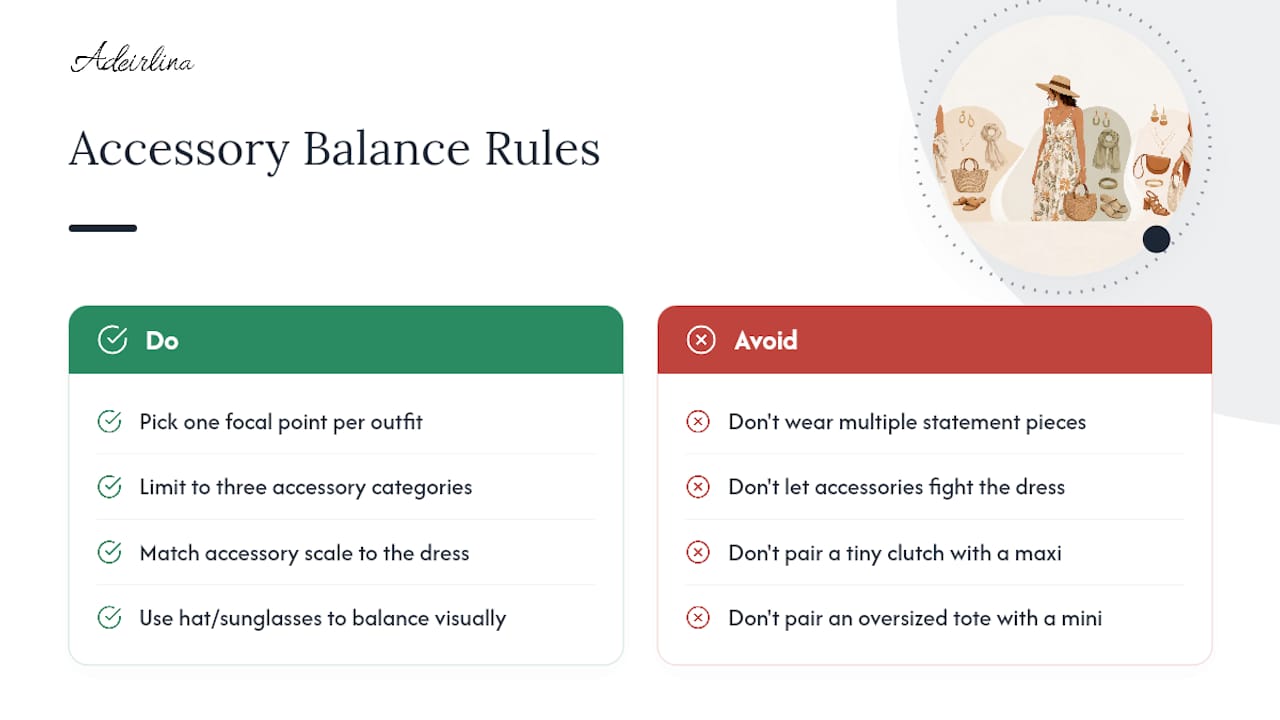
The most common accessorizing mistake isn’t choosing the wrong piece. It’s choosing too many good pieces at once. A sundress with a statement print, a bold necklace, a patterned bag, and oversized sunglasses is fighting itself for attention.
A simple rule fixes this: pick one focal point per outfit. If the dress itself is a statement (bold print, unusual cut, bright color), let the accessories go quiet, neutral bag, simple sandals, minimal jewelry. If the dress is a plain, solid color, that’s your cue to let one accessory, a bold earring, a printed scarf, an unusual bag, take the spotlight.
Counting helps more than instinct does. Aim for no more than three accessory categories doing visual “work” at once: jewelry, bag, and shoes count as the core three, while a hat or sunglasses can join without tipping the balance since they’re worn away from the torso. Add a scarf or a belt as a fourth element only if you’ve simplified elsewhere, dropping to stud earrings instead of statement ones, for example.
Scale also needs balancing against the dress’s own proportions. A tiny clutch looks lost against a voluminous maxi dress, while an oversized tote can swallow a delicate mini. Matching the visual weight of your accessories to the visual weight of the dress, not just the color or style, is the detail most people skip and the one that makes photos look effortlessly put together instead of accidentally busy.
Sunglasses Styles That Complement a Sundress
Sunglasses do more heavy lifting in sundress styling than most people give them credit for, largely because they sit right at eye level in every photo.
Oversized round or square frames pair naturally with flowy, romantic sundresses, especially floral or tiered ones, softening the overall look rather than adding sharpness. Cat-eye frames do the opposite: they add structure and a slightly retro edge, which works well against a simple, solid-colored sundress that could use a little more personality.
Aviators lean casual and practical, a strong match for a day-explorer outfit where function matters as much as style. Tortoiseshell frames are the most versatile color choice across the board, reading warm against nearly every sundress shade from white to rust to deep green, which is why they show up so often in editorial roundups as the safe travel pick.
Lens color matters more than people expect. Brown or amber lenses warm up cooler dress tones, while gray or green lenses stay neutral against almost anything, including bold prints that don’t need extra color competition. If your sundress already carries a metallic thread or gold hardware on the bag, sunglasses with gold-toned frames tie the whole look together without adding a fifth accessory to track.
Hairstyles That Work With Sundress Accessorizing
Hair is the accessory people forget they’re wearing, and it interacts directly with everything else on this list. A halter or off-the-shoulder neckline looks best with hair pulled back, a low bun or a sleek ponytail, since loose hair competes with the exposed shoulder line and hides the neckline detail you chose the dress for in the first place.
Beachy, loose waves pair naturally with a flowy, printed sundress and a wide-brim hat, reinforcing the relaxed, coastal mood without extra styling effort. A sleek, straight style or a low chignon does the opposite work, sharpening a solid-colored or minimalist sundress into something that reads polished enough for a sunset dinner.
Braids, whether a simple side braid or a more detailed style, solve a practical travel problem: they keep hair controlled through a day of wind, humidity, and hat brims, then release into soft waves by evening with barely any touch-up. That single transition, structured for day, loosened for night, mirrors exactly how the outfit formulas in this guide are supposed to work: minimal effort, maximum range.
Why the Matching-Set Approach Actually Works
Most styling advice treats accessorizing as an accessory problem. It’s really a fabric and construction problem first. A sundress that fights your body all day, pulling at the waist, wrinkling by noon, gives even the best jewelry nothing to work with. A soft cotton set with an adjustable, stretchy fit is what makes a hat, a belt, or a pair of heels look intentional instead of like damage control.
Picture a market stroll in the morning followed by a boat ride that afternoon: one adjustable set handles both without a single wardrobe change. Or a beach nap that rolls straight into a sunset dinner, where all you’ve swapped is sandals for heels and added earrings.
The pieces you accessorize matter as much as the accessories themselves. Placeholders for customer photos and traveler feedback would sit naturally here, showing the same set styled three different ways across one trip.
— Naomi
Ready to Build Your Own Travel-Ready Sundress Capsule?
A soft cotton matching set with an adjustable, stretchy fit solves the exact problem this guide has been walking through: one piece that moves from a morning market to a beach nap to a sunset dinner without a suitcase full of backup outfits.
[
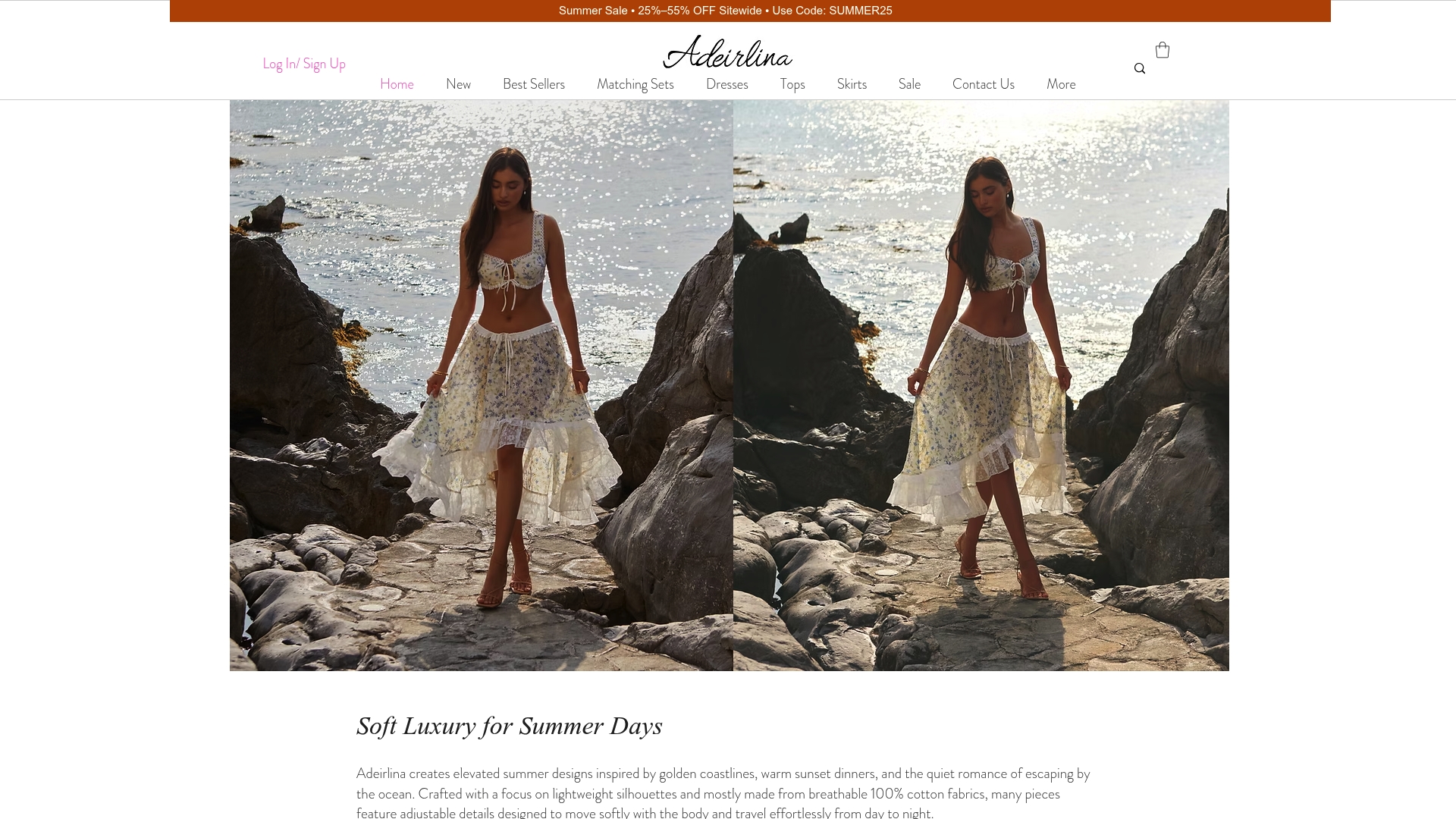
The sets have gone viral on Instagram and have been worn by customers, influencers, and celebrities across the globe, and they come in a wide range of colors, so there’s a shade for every destination, mood, and occasion. If you’re ready to pack lighter without giving up polish, browse the Adeirlina matching sets collection and pick the color that matches your next trip. Pair it with ideas from the best summer matching sets guide to plan outfits before you even leave home.
Sources
FAQ
What are the must-have accessories for a sundress?
A hands-free bag, one versatile pair of shoes, and one statement jewelry piece cover most occasions. These three categories change a sundress’s mood faster than anything else you can pack.
How do I dress up a plain sundress for dinner?
Add a low wedge or heel, statement earrings, and swap your daytime crossbody for a clutch. A lightweight wrap over the shoulders finishes the transition.
What fabric is best for a travel sundress?
Breathable, wrinkle-resistant cotton is the standard for hot-climate travel because it moves with heat and humidity better than synthetic blends. Adjustable design details, like tie straps or smocked backs, add versatility on top of that comfort.
Can one matching set really work for an entire vacation?
Yes, especially when the set is made from adjustable, breathable cotton like Adeirlina’s designs, since a few accessory swaps can carry it from morning sightseeing to an evening dinner. Coordinated pieces also reduce the daily decision of what to pair together.
How many accessories are too many for one sundress outfit?
Keep it to about three core categories, jewelry, bag, and shoes, plus one optional layer like a hat or scarf. Beyond that, accessories start competing with the dress instead of complementing it.
Recommended